

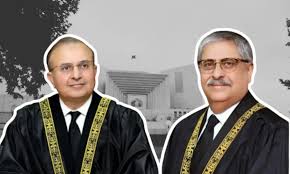
In a dramatic and unprecedented development, President Asif Ali Zardari has accepted the resignations of two senior judges of the Supreme Court of Pakistan—Mansoor Ali Shah and Athar Minallah—who stepped down in protest following the passage of the 27th Amendment to the Constitution of Pakistan. The Express Tribune+2Dawn+2
Both judges tendered their resignations just hours after the constitutional amendment was signed into law. They have each cited the reform as an existential threat to the independence and foundational integrity of Pakistan’s judiciary. Their justification reflects deep-seated concerns over the balance of power and constitutional safeguards. Geo News+1
What triggered the resignations?
The 27th Amendment, passed with a two-thirds majority in Parliament, introduces significant changes to the judicial and constitutional structure of Pakistan. Among the key alterations: the creation of a new Federal Constitutional Court above the Supreme Court, revision of the standing of the Chief Justice, and other structural tweaks that, according to critics, dilute the Supreme Court’s authority and place the judiciary under executive control. Geo News+1
Justice Mansoor Ali Shah, in a 13-page resignation letter, described the amendment as “a grave assault on the Constitution of Pakistan… it dismantles the Supreme Court of Pakistan, subjugates the judiciary to executive control and strikes at the very heart of our constitutional democracy.” The Express Tribune+1
Justice Athar Minallah likewise wrote: “The Constitution that I swore an oath to uphold and defend is no more. What is left is a mere shadow—one that breathes neither its spirit, nor speaks the words of the people to whom it belongs.” Geo News+1
Implications for judicial independence
The resignations of two senior Justices from Pakistan’s apex court raise serious questions about the future of judicial independence in the country. They signal a breakdown of trust between the judiciary and the legislature/executive. When judges of this stature feel compelled to resign in protest, it underlines not just institutional tension but a constitutional crisis.
Moreover, the creation of a new Federal Constitutional Court, and the re-structuring of authority between it and the Supreme Court, suggests a shift in the vision of Pakistan’s separation of powers. Analysts argue that this may weaken the Supreme Court’s role as guardian of the fundamental rights and protector of constitutional values. Business Recorder
The government’s stance
The federal government, while acknowledging the resignations, has described them as “political speeches” and rejected the judges’ narrative of institutional erosion. For example, authorities have insisted the amendment was properly legislated and that the resignations reflect individual choice not structural failure. Geo News
What happens next?
With the departure of two key Justices, the Supreme Court of Pakistan will need to fill these vacancies. Meanwhile, the new amendment’s structures—including the Federal Constitutional Court—must be populated and made operational. How these appointments and transitions occur will influence public trust in the judiciary and the broader constitutional order.
Legal observers will be watching:
- How the remaining judges of the Supreme Court respond—whether they accept the new framework or mount a challenge.
- Whether the new court structure promotes or weakens access to justice for ordinary citizens.
- If bar associations, legal bodies and civil society mobilise in response – potentially leading to reform demands or backlash.
Why this matters to Pakistan’s democracy
The judiciary is a central pillar of constitutional governance: it resolves disputes, safeguards rights and ensures accountability. When its independence is called into question, democracy itself is at risk. The fact that two senior judges believed resignation was the only honourable course sends a strong message: they believed the new system could no longer deliver justice in the way the Constitution originally intended.
For citizens of Pakistan and observers of South Asian constitutional politics, this moment serves as a litmus test: will the judiciary adapt and maintain its role? Or will the alteration of the judicial landscape set a precedent for further diminution of institutional autonomy?
Conclusion
President Asif Ali Zardari’s acceptance of the resignations of Justices Mansoor Ali Shah and Athar Minallah marks a critical juncture in Pakistan’s constitutional story. These resignations underscore the deep friction between the desire for institutional reforms and the imperative of preserving judicial independence. How Pakistan moves from here—whether the reforms stabilise or undermine its constitutional order—will be watched closely both domestically and internationally.
For deeper reading: see details of the 27th Constitutional Amendment and reactions to it. Wikipe


