

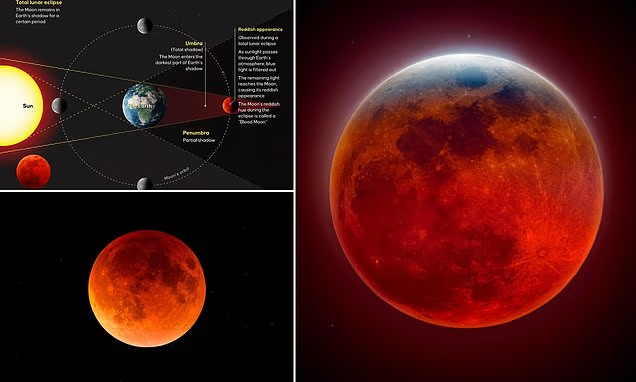
Why is the Moon Red Tonight?, If you look up at the night sky tonight, you may notice something extraordinary—the moon glowing a striking shade of red. This phenomenon, often called a “Blood Moon”, occurs during a total lunar eclipse. Instead of disappearing, the moon takes on a reddish or coppery glow, leaving skywatchers in awe.
The reason behind this stunning transformation lies in Earth’s atmosphere. When the Earth comes directly between the Sun and the Moon, it blocks sunlight from directly hitting the lunar surface. However, some sunlight still manages to pass through Earth’s atmosphere. During this passage, shorter light wavelengths such as blue and violet scatter away, while longer red and orange wavelengths bend around the Earth and reflect onto the Moon’s surface. As a result, the Moon appears red.
This natural filter effect is the same reason why sunsets and sunrises look red or orange. During a lunar eclipse, it’s as if all the world’s sunrises and sunsets are being projected onto the Moon.
When to Watch the Blood Moon
The exact timing of a blood moon depends on your location, but generally, a total lunar eclipse can be seen worldwide where the night sky is clear. In many regions, the event begins as the Earth’s shadow slowly creeps across the Moon, creating a dim shading effect before the full reddish hue emerges.
- Partial Eclipse Begins: The Moon starts to enter Earth’s shadow.
- Total Eclipse (Blood Moon): The Moon is fully engulfed in the shadow and turns red.
- Maximum Eclipse: The Moon appears its deepest shade of red.
- Eclipse Ends: The shadow moves away, and the Moon returns to its bright silver glow.
Stargazers should plan to be outside at least 15–20 minutes before the peak eclipse, as the transformation into a Blood Moon is gradual and mesmerizing to watch.
How Long Will the Lunar Eclipse Last?
A lunar eclipse can last several hours from start to finish. The totality phase—when the Moon is completely red—typically lasts between 60 to 90 minutes, depending on Earth’s alignment. Including the partial phases, the entire eclipse may span 3 to 4 hours.
This makes it a more leisurely celestial event compared to solar eclipses, which are often over in just a few minutes. Lunar eclipses are also safe to view with the naked eye, binoculars, or telescopes—no protective glasses are needed.
The Significance of the Blood Moon
Throughout history, blood moons have fascinated cultures around the world. Ancient civilizations often linked them to omens, myths, or prophecies, while today, astronomers appreciate them as predictable and scientifically remarkable events.
For many sky enthusiasts, a blood moon is not just a scientific event but also a spiritual and symbolic one. It represents cycles of change, reflection, and the beauty of natural cosmic order.
How to Get the Best View
- Find a Dark Spot: Light pollution can dim the beauty of the red moon. A park, open field, or rooftop with minimal city lights is ideal.
- Check Local Timings: Verify the lunar eclipse schedule in your region.
- Bring Binoculars or a Telescope: While not necessary, they can enhance the details of the Moon’s surface during the eclipse.
- Capture the Moment: For photography lovers, use a tripod and adjust camera settings for low light to capture the Moon’s red glow.
Final Thoughts
The blood moon is a celestial performance that combines science and beauty, reminding us of our connection to the universe. Whether you watch it for astronomical curiosity, spiritual significance, or pure wonder, tonight’s lunar eclipse is an event you won’t want to miss.
For more insights on natural wonders and wellness living, visit our Alquwwah Natural Blog. And if you want to dive deeper into upcoming eclipses and celestial events, check out NASA’s official eclipse page.


